01
Scope 1
Direct emissions from sources controlled by the organisation.
Examples can include
- Fuel combustion
- Company vehicles
- Industrial processes

A carbon footprint should tell a company more than a single number.
A credible carbon footprint in Kosovo has to be explainable, not just reported. Habitat helps companies establish structured greenhouse-gas inventories aligned with the GHG Protocol. Through Karbon360°, organisations can centralise data, apply documented emission factors and maintain calculation traceability.
A credible carbon footprint should be explainable — line by line, back to the invoice it came from.
The first sustainability report should not start in a design file — it should start in your invoices.
Direct emissions from sources controlled by the organisation.
Indirect emissions associated with purchased energy.
Other indirect emissions across the value chain. Depending on the company, these can include:
When a customer, a bank or an auditor asks how a figure was produced, the answer has to hold. That means documented emission factors, a clear link between activity data and result, and a record of the assumptions behind every calculation — the discipline the GHG Protocol Corporate Standard is built around.
Companies that can explain their numbers respond faster, with fewer follow-up questions — and they can act on what the data shows, because they know where the emissions actually sit.
Karbon360° transforms energy and business activity data into structured greenhouse-gas inventories and verifiable sustainability information — so a footprint can be traced back to the data that produced it.
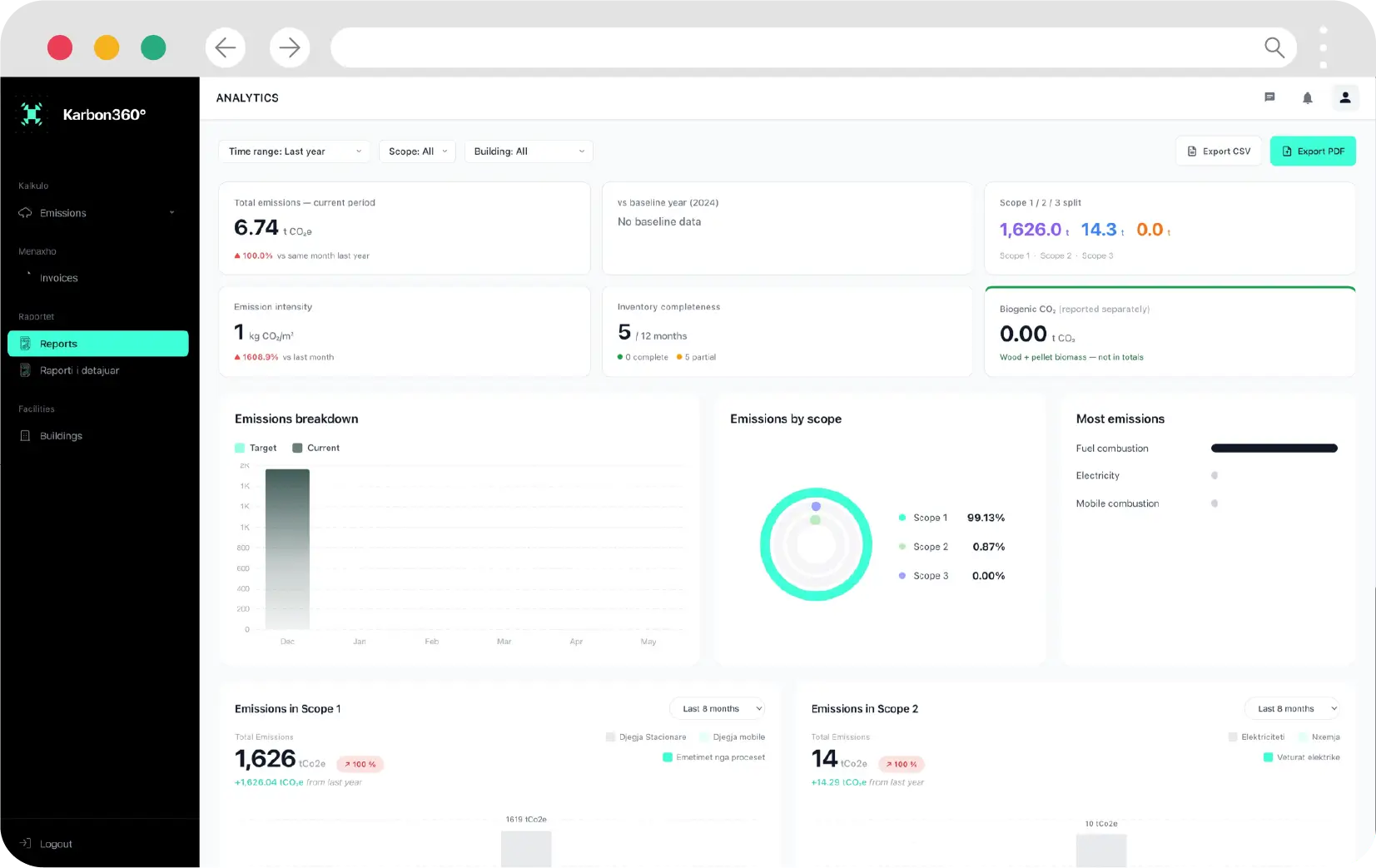
Talk to Habitat about building a structured greenhouse-gas inventory across Scope 1, Scope 2 and relevant Scope 3 categories.
www.worldofhabitat.com