CBAM consulting, before the deadline decides for you.
The first annual CBAM declaration is due 30 September 2027, covering everything imported in 2026. EU importers have to declare the embedded emissions of their steel, aluminium, cement, fertiliser, hydrogen and electricity imports, and the producers abroad have to supply verified data, or the importer falls back on default values with a mark-up. Habitat's CBAM consultants work both sides of that border, and every number we prepare is built in Karbon360° so verifiers can check it fast.
2026 is the data year. 2027 is the bill.
The definitive regime has applied since 1 January 2026. Every CBAM import this year lands in the first annual declaration.
Actual emissions only count if an accredited verifier signs them off, after a physical site visit in the first year. Accreditation only started in 2026, and authorities expect limited capacity at first.
Without verified actual data, the importer declares Commission default values, with a mark-up of 10% for 2026 imports, rising to 20% and then 30%.
CBAM consulting services, end to end.
One team for the importer and the supplier side, so the declaration and the data behind it match.
Two sides, one dataset.
| You are | Your duty | What Habitat does |
|---|---|---|
| An EU importer of CBAM goods | Legal: authorisation, the annual declaration, buying and surrendering certificates | Scope check, declarant set-up, supplier data programme, defaults-vs-actuals decision, declaration support |
| A producer outside the EU | No legal obligation, but your EU customer needs your verified emissions or pays more | Installation-level embedded emissions, evidence pack, verifier coordination, data delivery through the Registry or the template |
| A trader or customs representative | Depends on your role in the import | Role mapping, client communication, data flows between producer and declarant |
Country guides for producers: Western Balkans, Turkey, India, United States.
Work back from 30 September 2027.
Built to get you verified.
A verifier's time goes into one question, asked hundreds of times: where does this number come from? Habitat answers it before the verifier asks. Every figure we prepare runs through Karbon360°, which keeps the activity data, the evidence document, the emission factor with its source and version, and a step-by-step calculation trace behind each result.
The verifier receives one organised package instead of a folder of spreadsheets: the operator's emissions report in the Commission's structure, a calculation trace per good, the evidence index and a methodology note. Less chasing, fewer queries, and a shorter path to a signed verification report.
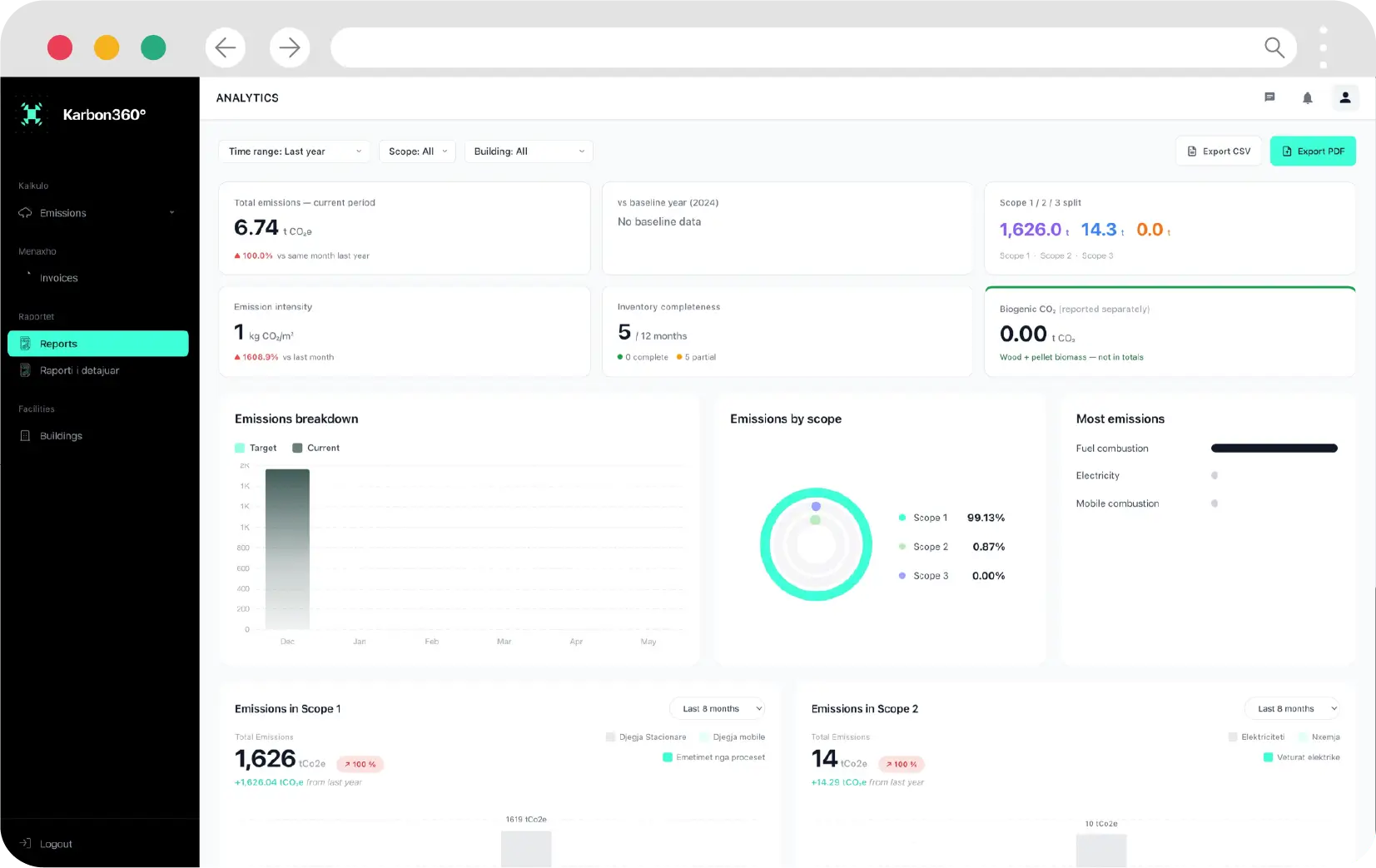
Karbon360°
Karbon360° prepares CBAM emissions reports with a calculation trace on every figure, country-specific factors with source and version, and every record recalculated on the server, so verifiers check evidence instead of rebuilding numbers.
An unverified number is a default value with extra steps.
Frequently asked.
What does a CBAM consultant do?
When is the first CBAM declaration due?
What happens if a producer's emissions are not verified?
Do exporters outside the EU have CBAM obligations?
Do you calculate the emissions or only advise?
Do you work outside Europe?
Start before the verifiers are booked.
Tell us your goods, your countries and your customers. We will send back the data plan and the timeline to a verified 2026 report.